Life After Eating Disorder Treatment: What Recovery Looks Like
Medically reviewed by the Revelare Recovery Clinical Team
Finishing an eating disorder treatment program is a real accomplishment. It is also a beginning. Life after eating disorder treatment asks you to practice what you learned in the places where the eating disorder once had the most pull: your kitchen, your workplace, your relationships, and your own thoughts.
This page covers what long-term eating disorder recovery usually looks like, what aftercare involves, and how to protect your progress when life gets hard.
Treatment Ends, but Recovery Doesn’t
In treatment, structure does much of the work: scheduled meals, meal support, daily therapy, and a team who notices small changes. After discharge, more of that structure becomes yours to carry. That shift is normal, and for many women it is the hardest part.
In practical terms, recovery after treatment usually means:
- Following your meal plan without someone beside you at every meal
- Noticing eating disorder thoughts early, before they turn into behaviors
- Using coping skills in real situations, not only in a group room
- Keeping appointments, even on weeks when you feel fine
Recovery is rarely a straight line. Some days will feel easy and others will feel like starting over. Neither kind of day erases the progress you have made.
Find out if your insurance will cover the cost of treatment.
"*" indicates required fields
Stepping Down From PHP to IOP to Outpatient Care
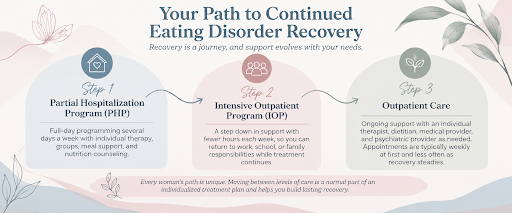
Stepping down gradually gives you time to practice independence while support is still close by. At Revelare Recovery, that path runs through two levels of care before you continue with providers in your community:
- Partial hospitalization program (PHP): PHP offers full days of programming several days a week, with individual therapy, groups, meal support, and nutrition counseling.
- Intensive outpatient program (IOP): IOP meets fewer hours each week, so you can return to work, school, or family responsibilities while treatment continues.
- Outpatient care: After IOP, most women keep working with an individual therapist and a dietitian, meeting weekly at first and less often as recovery steadies.
Each step down can bring up anxiety, even when it is the right move. Feeling nervous about less support does not mean you aren’t ready. Tell your team what worries you so your plan can account for it.
Continuing Care After Eating Disorder Treatment
Eating disorder aftercare is usually built around a small outpatient team that knows your history. That team often includes:
- An individual therapist to keep working on the emotions, patterns, and trauma beneath the eating disorder
- A registered dietitian to adjust your meal plan as your schedule, activity, and needs change
- A medical provider to monitor your physical health, lab work, and any lasting effects of the eating disorder
- A psychiatric provider if medication for co-occurring anxiety, depression, or another condition is part of your care
Before you finish treatment, ask your team about next steps, including which outpatient providers to see and how often. It helps when these providers talk with one another and share the same goals. If you can, schedule your first outpatient appointments before treatment ends so there is no gap in care during the first few weeks at home.
Building a Life Around Recovery
Maintaining eating disorder recovery long term is easier when recovery is woven into daily life rather than squeezed around it.
- Structure: Regular meals and snacks, steady sleep, and a predictable weekly rhythm leave fewer openings for the eating disorder.
- Support network: A few people who know your recovery goals, and whom you can call on a hard day, make setbacks less isolating. Peer support groups can add connection with women who understand.
- Coping skills: The skills that worked in treatment, such as distress tolerance, grounding, and self-compassion, work best when you practice them before a crisis.
- Life beyond food: The time and energy the eating disorder once took can go back into relationships, work, creativity, and rest.
Many women also face constant messages about dieting, body size, and “wellness” trends. Part of recovery is learning to notice those messages and choosing not to follow them.
What Relapse Warning Signs Look Like
Setbacks are common in eating disorder recovery, and a slip does not mean treatment failed. Catching early warning signs makes it easier to get back on track. Watch for:
- Skipping meals or snacks, or quietly cutting portions
- More time spent thinking about food, weight, or body shape
- Body checking, frequent weighing, or avoiding mirrors
- Returning urges to binge, purge, or exercise compulsively
- Pulling away from friends, family, or your treatment team
- Rising anxiety, low mood, or perfectionism during stressful transitions
If you notice these signs, tell someone on your treatment team. A written relapse prevention plan, built with your therapist, lists your personal triggers and the people you will contact. It gives you something concrete to follow when your judgment feels clouded.
When to Step Back Up to a Higher Level of Care
Returning to a higher level of care is not starting over. It is a common part of recovery, and it often works best, and for a shorter time, when it happens early.
Consider talking with your team about more support if:
- Eating disorder behaviors are happening more often or are harder to interrupt
- Weekly outpatient appointments no longer feel like enough
- You notice physical symptoms such as dizziness, weakness, or a racing heartbeat
- A major change, such as a move, a loss, or a new job, is shaking your routine
If you have chest pain, faint, or have thoughts of harming yourself, call 911 or go to the nearest emergency room. You can also call or text 988 to reach the Suicide & Crisis Lifeline.
Whether you finished treatment with us or somewhere else, our admissions team can talk through whether IOP or PHP makes sense right now. Call (404) 620-5169 for a confidential conversation.
The Family’s Role in Long-Term Recovery
Parents, partners, and close friends can make recovery easier to sustain. Helpful support often looks like:
- Learning about eating disorders, so behaviors aren’t mistaken for vanity or a lack of willpower
- Keeping comments about food, weight, and bodies, including their own, out of everyday conversation
- Sharing meals in a calm, predictable way
- Knowing the warning signs and agreeing ahead of time on how to raise a concern
- Respecting your independence as an adult woman while staying available
When it fits your care, involving loved ones before treatment ends can make the transition home smoother. Supporters need support too. Their own therapy or caregiver groups can help loved ones manage fear and frustration without placing it on you. Our guide for families supporting eating disorder recovery offers more ways to help.
Keep Building on What You Started
Recovery after treatment is ongoing work, and you don’t have to do it alone. Whether you are finishing a program, wondering if you need more support, or looking for your next step, learn more about eating disorder treatment for women in Atlanta at Revelare Recovery.
Call (404) 620-5169 · Verify Insurance
Disclaimer: This page is for educational purposes only. It is not a diagnosis or a substitute for professional medical or mental health care. If you are concerned about your health or a loved one’s, talk with a qualified provider. In an emergency, call 911.