
TMS Therapy in Atlanta: A Depression Treatment Option for Women
Medically reviewed by the Revelare Recovery Clinical Team
When depression hasn’t lifted after trying medication, it is easy to feel like nothing will work. Transcranial magnetic stimulation (TMS) is a non-invasive treatment that offers a different path. It doesn’t involve surgery or anesthesia, and it isn’t a medication.
This page explains what TMS therapy is, who it may help, what treatment is like, and how it can fit into a broader plan for depression treatment for women in Atlanta. Wherever you are in that search, you deserve clear information and real support.
What Is TMS Therapy?
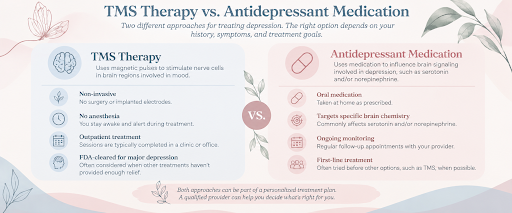
TMS uses magnetic pulses to stimulate nerve cells in areas of the brain involved in mood. A provider places an electromagnetic coil against your scalp, and the coil delivers repeated pulses. That is why you may also hear it called repetitive TMS, or rTMS.
TMS is FDA-cleared for major depression and is usually considered when other treatments haven’t helped enough. Researchers don’t fully understand why it works. It appears to activate brain regions that tend to be less active during depression.
TMS is different from other brain-based treatments in a few important ways:
- It is non-invasive, with no surgery or implanted electrodes
- It doesn’t require anesthesia, so you stay awake and alert
- Unlike electroconvulsive therapy (ECT), it doesn’t cause memory loss
- It isn’t a medication, so there are no pills or drug interactions to manage
You may also see the term “deep TMS,” which uses a different coil to reach deeper and wider areas of the brain. Your provider can explain which type fits your needs.
Find out if your insurance will cover the cost of treatment.
"*" indicates required fields
Who TMS Therapy May Help
TMS is most often considered for women whose depression has not improved enough with standard care, such as antidepressants and talk therapy. It may be worth discussing with a provider if you:
- Have tried antidepressants without enough relief
- Couldn’t tolerate the side effects of medication
- Still feel weighed down by low mood, fatigue, or hopelessness despite treatment
- Want an option that doesn’t involve adding another medication
For many women, depression is tangled up with other demands: caregiving, work, hormonal changes, and past trauma. Needing more than one approach isn’t a personal failure. It reflects how complex depression can be.
TMS isn’t right for everyone. A full medical and mental health evaluation helps confirm whether it is a safe option for you.
Not sure whether what you’re experiencing is depression? Our free depression self-test can help you start the conversation.
What a TMS Session Looks Like
TMS is done in an outpatient office or clinic. Before starting, you can expect a physical exam and a mental health evaluation to make sure TMS is a good fit.
- Mapping at your first visit. The first appointment is usually the longest. Your provider finds the right spot on your head for the coil and the right level of stimulation for you.
- Each treatment. You sit in a comfortable chair and wear earplugs while the coil rests against your head. You’ll hear clicking and feel a tapping sensation on your scalp, with short pauses in between. You stay awake the whole time.
- Afterward. Most people return to their normal routine right away, including work and driving. Some women prefer a ride home after the first session until they know how they’ll feel.
TMS is given as a series of sessions, usually several times a week over a number of weeks. Your provider will set a schedule that fits your plan. Symptom relief, if it comes, often takes a few weeks.
Possible Side Effects and Safety
TMS is generally considered safe and well tolerated. Side effects are usually mild to moderate, improve soon after a session, and tend to ease as treatment goes on. They may include:
- Scalp discomfort or pain
- Headache
- Tingling or twitching of facial muscles
- Lightheadedness
Your provider can often adjust the stimulation to make sessions more comfortable. Serious side effects are rare but can include seizures, hearing problems if ears aren’t protected, and mania, especially in people with bipolar disorder.
Before starting TMS, tell your provider if you:
- Are pregnant or planning to become pregnant
- Have metal or implanted medical devices, such as aneurysm clips, stents, a pacemaker, or cochlear implants
- Have a personal or family history of seizures
- Have bipolar disorder, psychosis, or a history of alcohol or drug use
- Have had a brain injury, stroke, or frequent severe headaches
- Take any medications or supplements
These details help your provider decide whether TMS is safe for you.
How TMS Fits With Therapy at Revelare
TMS can help ease depression symptoms, but symptoms are only part of the picture. Stress, trauma, grief, and long-held coping patterns often keep depression in place. After a TMS series, standard care such as therapy is often recommended to help protect the progress you make.
At Revelare Recovery, women work through those deeper layers in our trauma-informed partial hospitalization program (PHP) and intensive outpatient program (IOP). Depending on your needs, care may include:
- Cognitive behavioral therapy (CBT) and dialectical behavior therapy (DBT) for changing thought patterns and managing intense emotions
- Acceptance and commitment therapy (ACT) for building a life around your values
- Internal family systems (IFS) and somatic therapy for working with trauma held in the mind and body
- Treatment for co-occurring conditions, such as anxiety, eating disorders, or substance use
If you are receiving TMS or considering it, our team can talk with you about how structured therapy may support it. Every plan is built around your history and goals, in a women-only setting near Grant Park in Atlanta.
Insurance and Admissions
Coverage for depression treatment varies from plan to plan. The quickest way to understand your options is to check your benefits with our admissions team. It is free and confidential, and there is no commitment.
Frequently Asked Questions About TMS Therapy
What Is TMS Therapy?
TMS therapy, or transcranial magnetic stimulation, is a non-invasive treatment that uses magnetic pulses to stimulate areas of the brain involved in mood. It is FDA-cleared for major depression and is usually considered when medication and talk therapy haven’t helped enough.
Does TMS Therapy Hurt?
Most people feel a tapping sensation on the scalp during treatment. Some feel scalp discomfort or get a headache afterward. Your provider can often adjust the stimulation to make sessions more comfortable.
Can I Drive After TMS?
Yes, most people can drive and return to work after a session because TMS doesn’t use anesthesia. Some women choose to have a ride home after the first session until they know how they’ll feel.
Is TMS the Same as Electroconvulsive Therapy (ECT)?
No. TMS doesn’t require anesthesia and doesn’t cause seizures or memory loss the way ECT can. You stay awake and alert throughout each session.
How Do I Find TMS Therapy Near Me?
TMS is offered in outpatient offices and clinics. A psychiatric provider can tell you whether TMS is appropriate and help you find a location. If you live in the Atlanta area, our team can also talk with you about therapy options that support your depression treatment.
Does Insurance Cover TMS Therapy?
Coverage depends on your plan, and many plans have specific requirements before approving TMS. Contact your insurance company or the treating provider to confirm your benefits.
Talk With Our Atlanta Team About Your Options
Depression that hasn’t responded to treatment can leave you feeling stuck, but there are still paths forward. Whether you are exploring TMS, looking for therapy that goes deeper, or unsure where to begin, our team will listen first and help you find a next step that fits.
Call (404) 620-5169 · Verify Insurance
If you are having thoughts of suicide or self-harm, call or text 988 to reach the Suicide & Crisis Lifeline, or call 911.
Disclaimer: This page is for educational purposes only. It is not a diagnosis, a recommendation for any specific treatment, or a substitute for professional medical or mental health care. Talk with a qualified provider about whether TMS is right for you.