
ARFID Treatment for Women in Atlanta, GA
Food Can Feel Safe Again
If eating has always felt harder for you than for the people around you, you’re not imagining it, and it isn’t a lack of willpower. Avoidant/restrictive food intake disorder (ARFID) is a recognized eating disorder, and adult women can and do recover from it. At Revelare Recovery, ARFID care is part of our eating disorder treatment for women in Atlanta, with a therapist and a registered dietitian working side by side on your plan.
You don’t need to have everything figured out before you reach out. Our admissions team can talk through what you’re experiencing and help you decide what comes next.
What ARFID Is (and Why It’s Not Picky Eating)
ARFID is an eating disorder in which a person eats too little, or too narrow a range of foods, to meet her body’s needs. Unlike anorexia, it isn’t driven by fear of weight gain or concern about body shape. The restriction comes from something else, and that’s often why it gets brushed off as picky eating for years.
The difference is impact. Picky eating is a preference. ARFID affects your health, your energy, and your daily life, and it can lead to weight loss, nutritional deficiencies, or dependence on supplements to get through the day. It can also make work lunches, dates, travel, and family meals feel impossible.
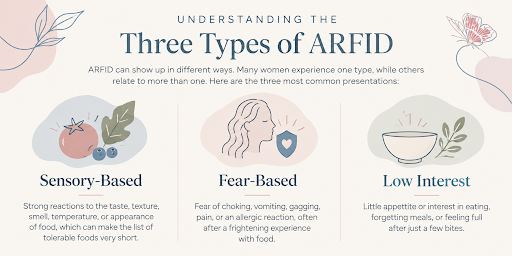
Clinicians generally describe three presentations, and many women experience more than one:
- Sensory-based: Strong reactions to the taste, texture, smell, temperature, or appearance of food, so the list of tolerable foods stays very short
- Fear-based: Fear of choking, vomiting, gagging, pain, or an allergic reaction, often after a frightening experience with food
- Low interest: Little appetite or interest in eating, forgetting meals, or feeling full after a few bites
Find out if your insurance will cover the cost of treatment.
"*" indicates required fields
ARFID in Adult Women: Often Missed, Still Treatable
ARFID is usually discussed as a childhood condition, but there is no age limit on the diagnosis. Many adult women have lived with it since childhood without a name for it. It only became a formal diagnosis in 2013, so plenty of women grew up hearing they were just fussy eaters.
Adult ARFID can be easy to overlook for a few reasons:
- Weight varies: Some women with ARFID are underweight, but many are not, so the problem isn’t visible from the outside
- It gets mistaken for other things: Restriction may be read as anorexia, anxiety, or a digestive issue instead of an eating disorder
- Women work around it: Planning meals around safe foods, skipping social events, or quietly eating before going out can hide how much space ARFID takes up
ARFID often shows up alongside anxiety, ADHD, or a history of trauma around food or the body. In a women-only setting, you can talk openly about all of it, including the embarrassment many adult women carry about their eating.
How We Treat ARFID at Revelare
ARFID treatment works best when it matches what’s actually driving the restriction. After a full assessment, your therapist and dietitian build a plan around your presentation, your history, and your goals. Most plans draw on cognitive behavioral therapy (CBT), gradual food exposure during supported meals, and nutrition counseling, with other approaches added as needed.
Sensory-Based ARFID
The goal is to widen your range of foods slowly, at a pace that feels manageable. You’ll work with your team on small, planned steps: noticing a new food, touching or smelling it, then tasting it. Exposure happens during real meals with support, not only in a therapy room. CBT helps you work with the anxious thoughts that come up along the way.
Fear-Based ARFID
When eating feels dangerous, the work focuses on the fear itself. Therapy helps you understand how a past choking, vomiting, or pain experience shaped your eating, then gradually rebuilds trust in your body. Trauma-informed care and somatic therapy can help calm a nervous system that has learned to treat food as a threat.
Low-Interest ARFID
When hunger cues are faint or easy to miss, structure does much of the heavy lifting. Your dietitian helps you set a regular eating rhythm, find foods that feel easier to start with, and build routines that don’t depend on appetite. Therapy explores what gets in the way, from distraction to low mood, so eating becomes more consistent over time.
Many women in our program also work on co-occurring anxiety, depression, or trauma in the same plan, because ARFID rarely exists in isolation.
Nutritional Rehabilitation With a Registered Dietitian
Every woman in our eating disorder program works directly with a registered dietitian who specializes in eating disorders. With ARFID, that partnership is central, because restoring nutrition and expanding food variety go hand in hand.
Your dietitian will help you:
- Understand what your body has been missing and how that may affect energy, focus, and mood
- Build a meal plan that starts with your current safe foods instead of taking them away
- Add new foods in small, realistic steps that line up with your therapy work
- Practice eating in social settings, so recovery holds up outside the program
The aim isn’t perfect eating. It’s enough nourishment and flexibility for food to stop running your schedule.
Levels of Care for ARFID: PHP and IOP
Revelare treats ARFID through two structured outpatient levels of care, so you can step down gradually as eating becomes more stable.
- Partial hospitalization program (PHP): Full-day treatment five days a week, with individual therapy, group therapy, supported meals, and nutrition counseling. PHP suits women who need daily structure but don’t need overnight care.
- Intensive outpatient program (IOP): Three to four days a week, leaving room for work, school, or family. IOP often follows PHP, or it can be a starting point when symptoms don’t call for full-day care.
Women traveling from outside Atlanta can stay in our supportive housing near the center while attending programming. If your assessment shows you need more medical support than outpatient care provides, our team will help you find the right next step.
When to Seek Help for ARFID
It may be time to talk with a professional if you notice any of these patterns:
- Your list of safe foods is short, or it has gotten shorter
- You’ve lost weight without trying, or you rely on supplements or drinks to get through the day
- You often feel tired, dizzy, cold, or foggy
- You avoid restaurants, work events, travel, or meals with family because of food
- Fear of choking or vomiting keeps you from eating certain textures or foods
- You’ve tried to “just eat more” on your own and it hasn’t stuck
You don’t have to be underweight or in crisis to deserve care. If you’re fainting, having chest pain, or feel physically unsafe, call 911 or go to the nearest emergency room first.
Insurance and Admissions
Starting treatment begins with a private, judgment-free conversation. Here’s what to expect:
- Reach out: Call (404) 620-5169 or submit the insurance form. You can share as much or as little as you’re comfortable with.
- Benefits review: Our admissions team reviews your insurance benefits and explains coverage, out-of-pocket costs, and payment options before you commit to anything.
- Assessment: A clinical assessment helps us confirm whether PHP or IOP fits your needs, or whether another level of care would serve you better.
- Start date: Once you’re ready, we’ll set a start date and help you plan around work, family, or housing.
Frequently Asked Questions About ARFID Treatment
What Does ARFID Treatment Involve?
ARFID treatment usually combines therapy, often cognitive behavioral therapy with gradual food exposure, and nutrition counseling with a registered dietitian. The plan is tailored to whether restriction is driven by sensory sensitivity, fear of negative consequences, or low interest in eating. At Revelare, this care is delivered through PHP and IOP.
Can Adults Get Treatment for ARFID?
Yes. ARFID has no age limit, and many adults have lived with it since childhood without a diagnosis. Adult women can benefit from the same core approaches used with younger patients, adapted to adult life, work, and relationships.
Is ARFID Just Picky Eating?
No. Picky eating is a preference that doesn’t harm health. ARFID is a diagnosable eating disorder that limits how much or how many foods someone eats, enough to affect nutrition, weight, energy, or daily functioning.
Do I Need to Be Underweight to Get Help for ARFID?
No. Many people with ARFID are at a typical weight. Treatment decisions are based on how restriction affects your health, nutrition, and daily life, not on weight alone.
How Long Does ARFID Treatment Take?
It depends on your symptoms, health, and progress. Many women start in PHP and step down to IOP as eating becomes more consistent. Your team will review your plan regularly and adjust it with you.
Does Insurance Cover ARFID Treatment?
Coverage depends on your plan and benefits. Our admissions team can review your insurance, explain any out-of-pocket costs, and talk through payment options before you begin.
Start ARFID Treatment in Atlanta
Living around a short list of safe foods is exhausting, and you don’t have to keep doing it alone. Revelare Recovery offers women-only ARFID treatment in Atlanta, with a team that understands how ARFID shows up in adult life. Call us or verify your insurance to take the first step.
Disclaimer: This page is for general educational purposes and is not a diagnosis or a substitute for professional medical advice. If you’re concerned about your eating or health, talk with a qualified healthcare provider. In an emergency, call 911.