What Anxiety Treatment Actually Looks Like
If anxiety has started shaping your days, the thought of getting help can bring its own set of worries. What happens on the first call? Will you have to stop working? What do you actually do all day? Not knowing what comes next keeps many women from reaching out.
At Revelare Recovery, anxiety treatment for women takes place in two structured outpatient levels of care: a partial hospitalization program (PHP) and an intensive outpatient program (IOP). You attend programming at our Atlanta center and return home afterward, and supportive housing near the center is available for women who need a place to stay during treatment.
Knowing what each step involves, from the first phone call to the changes many women notice over time, can make it easier to take the first one.
The First Call and Assessment
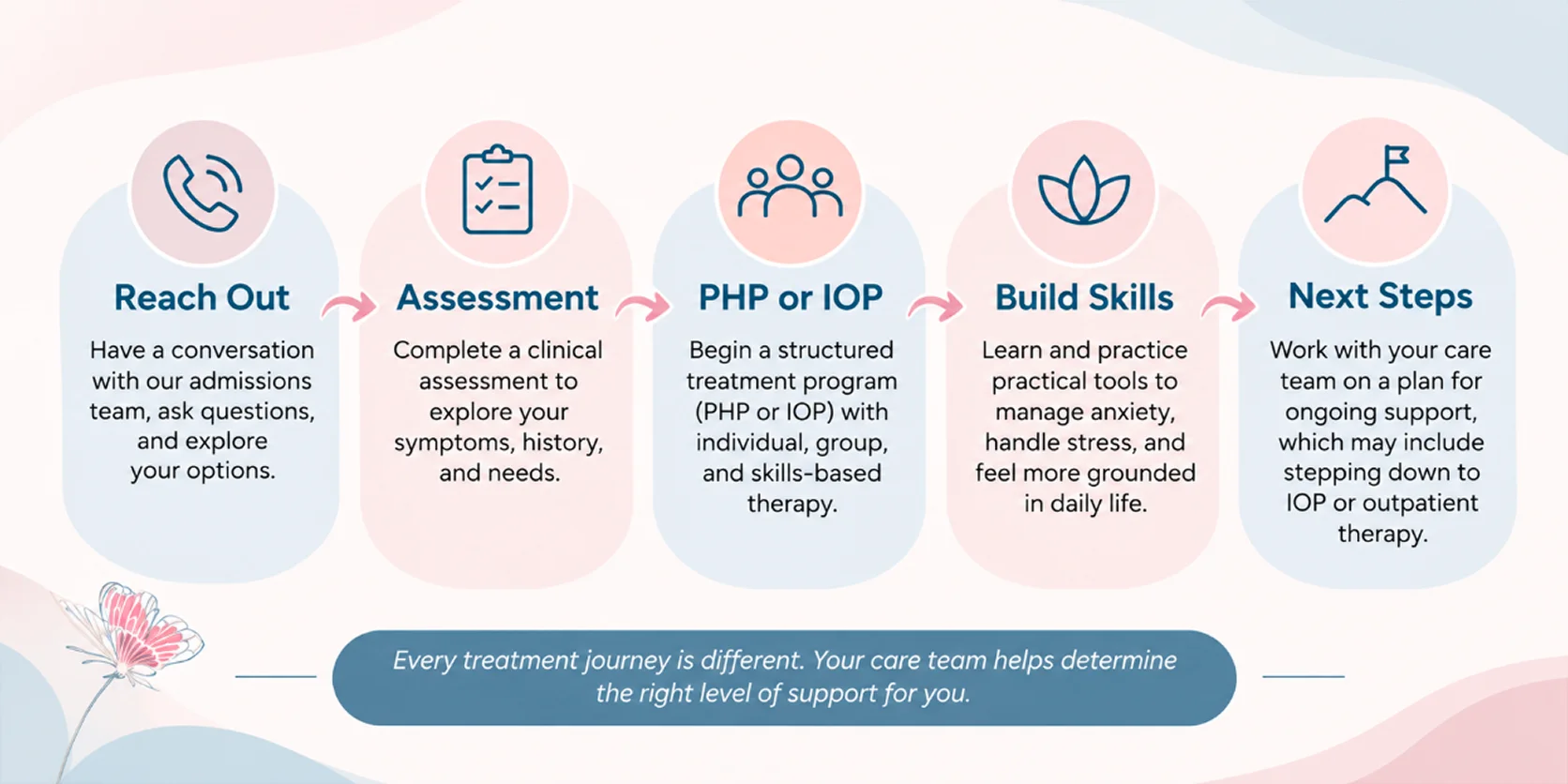
Treatment starts with a conversation, not a commitment. When you call (404) 620-5169, an admissions coordinator listens to what’s been going on, answers your questions, and talks through practical details like scheduling and insurance. You don’t need a diagnosis or the right words before you call.
The next step is a clinical assessment. A clinician asks about your symptoms, how long they’ve been present, and how they affect your work, relationships, sleep, and daily routine. They also ask about your history, including past treatment, stressful or traumatic experiences, and any other concerns such as depression, disordered eating, or substance use. Anxiety often shows up alongside these conditions, and a full picture helps shape a plan that fits.
From there, the team recommends a level of care. Some women start in PHP and step down to IOP, while others begin in IOP. If another type of care would serve you better, the team can help you think through next steps.
Find out if your insurance will cover the cost of treatment.
"*" indicates required fields
What PHP Looks Like for Anxiety
PHP is the most structured level of care Revelare offers, with full days of programming several days a week. It tends to fit women whose anxiety makes it hard to get through a workday, who are having frequent panic attacks, or who have started avoiding places and people they used to manage. You get daily support without an overnight hospital stay.
A PHP day may include:
- Check-in group: a chance to name how you’re arriving and what feels hardest that day
- Skills groups: practical tools for calming the body, catching anxious thought patterns, and handling distress
- Individual therapy: one-on-one time with your therapist to work on what’s driving your anxiety
- Process groups: time with other women to talk through what’s coming up, which many find eases the sense of being alone with it
- Practice and planning: setting small, specific goals to try between sessions
Because every group is women-only, many clients find it easier to speak openly about pressures that often sit underneath anxiety, such as caregiving, work expectations, body image, or past relationships.
What IOP Looks Like for Anxiety
IOP offers the same kind of therapeutic support in fewer hours each week, so you can keep up with work, school, or family while you’re in treatment. Some women start here. Others step down to IOP after PHP, once daily structure is less necessary but regular support still matters.
IOP usually combines group therapy and individual sessions, with more of the focus on using skills in real life. You might practice speaking up in a meeting you’ve been dreading, then bring what happened back to group the next session. That rhythm of trying something new and reviewing it with support is often where lasting change takes hold.
The team checks in on your progress along the way. If symptoms ease, sessions can taper. If things get harder, your plan can adjust, including stepping back up to PHP for a time.
Common Therapies Used in Anxiety Treatment
Most anxiety treatment centers on psychotherapy, also called talk therapy. Cognitive behavioral therapy (CBT) is one of the most studied approaches for anxiety, and acceptance and commitment therapy (ACT) has a growing base of research behind it (1). Your therapist matches approaches to your history and goals rather than following a fixed script.
Therapies used at Revelare include:
- Cognitive behavioral therapy (CBT): noticing anxious, automatic thoughts, questioning them, and changing the habits that keep worry going
- Acceptance and commitment therapy (ACT): making room for uncomfortable feelings without letting them make decisions, and moving toward what matters to you
- Dialectical behavior therapy (DBT): skills for riding out intense emotions, tolerating distress, and handling relationships
- Somatic experiencing: body-based work that helps calm a nervous system stuck on high alert
- Internal family systems (IFS) and narrative therapy: ways to understand the worried, protective parts of yourself and the stories anxiety tells
All care is trauma-informed, which means the team keeps in mind how past experiences may be feeding present fear and paces the work so it feels safe.
Some women also take medication for anxiety, prescribed by a psychiatrist or other medical provider. If you already take medication or are wondering about it, bring it up during your assessment so the team can factor it into your plan.
What Improvement Can Look Like
Improvement usually comes gradually, not all at once. Therapy takes time to work, and progress often includes setbacks along the way (1). A hard week doesn’t erase the ground you’ve gained.
As treatment goes on, many women notice changes like:
- Panic or waves of worry that come less often and pass more quickly
- Better sleep and more energy during the day
- Catching an anxious thought before it spirals
- Going back to places, plans, or conversations you’d been avoiding
- Feeling more like yourself at work and at home
When you’re ready, the team helps you plan the next step, whether that’s moving from PHP to IOP or from IOP to ongoing outpatient therapy. The goal is to leave with skills you can keep using and a clear plan for what to do if anxiety flares up again.
Frequently Asked Questions About What to Expect in Anxiety Treatment
How Long Does Anxiety Treatment Last?
It depends on your needs, so there’s no set timeline. Many women spend time in PHP, step down to IOP, and then continue with outpatient therapy. Your team reviews your progress regularly and adjusts the plan as you go.
Can I Keep Working During Treatment?
Often, yes. IOP is designed to fit around work, school, or family. PHP involves full days of programming, so many women adjust their schedules or take time off while they’re in it.
Do I Need a Diagnosis Before I Call?
No. You can call even if you’re not sure what you’re dealing with. The clinical assessment helps clarify what’s going on and which level of care fits.
Will I Have to Talk About Trauma?
Only at a pace that feels manageable. Care is trauma-informed, so your therapist won’t push you to share more than you’re ready for.
Will My Insurance Cover Anxiety Treatment?
Coverage depends on your plan. You can verify your insurance coverage online, and our admissions team can walk you through what to expect.
Start Anxiety Treatment at Revelare Recovery
You don’t need to have everything figured out before you begin. If anxiety is making daily life feel smaller, a conversation with our admissions team can help you understand your options. Learn more about our anxiety treatment for women in Atlanta, or call (404) 620-5169 to talk with someone today.
Questions about cost are common, and we’ll walk you through them. You can verify your insurance coverage online in a few minutes.
Call (404) 620-5169 · Verify Insurance
Disclaimer and Sources
This page is for general information only and is not a diagnosis or a substitute for care from a qualified professional. If you are in crisis or having thoughts of suicide, call or text 988 to reach the 988 Suicide & Crisis Lifeline. In an emergency, call 911.
Sources