
Life After Trauma Treatment: What Recovery Really Looks Like
Completing trauma treatment can be a major turning point. For many women, it brings more stability, more insight, and more confidence in their ability to cope. But treatment ending does not mean recovery is over.
That distinction matters. Life after trauma treatment is often where recovery starts becoming part of everyday life. Instead of practicing skills only in a structured clinical environment, women begin using them at home, at work, in relationships, and during stressful moments they cannot always predict.
This phase can feel encouraging and vulnerable at the same time. Some symptoms may improve significantly, while others show up in new ways during major transitions. That does not mean treatment did not work. It means trauma recovery usually continues long after a formal program ends.
At Revelare, long-term healing is approached as an ongoing process. Women may continue building routines, strengthening support systems, and adjusting their level of care over time as their needs change.
Treatment Ends – Recovery Doesn’t
A common misunderstanding about trauma recovery is that once treatment is complete, symptoms should be gone for good. In reality, healing is usually more gradual than that.
Some women leave treatment feeling more grounded but still notice periods of anxiety, hypervigilance, sleep disruption, or emotional overwhelm. Others may find that they are doing well overall but still feel challenged by certain relationships, environments, or reminders connected to the past.
This does not automatically signal a setback. In many cases, it is a normal part of trauma recovery.
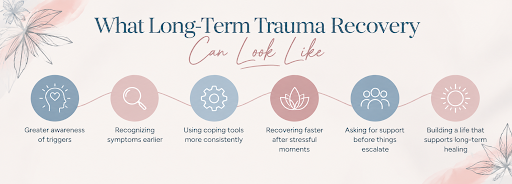
Recovery often means:
- Having more awareness of triggers
- Recognizing symptoms earlier
- Using coping tools more consistently
- Recovering faster after stressful moments
- Asking for support before things escalate
- Building a life that supports long-term healing
In other words, progress is not just about whether symptoms ever appear again. It is also about how a woman responds when they do.
Find out if your insurance will cover the cost of treatment.
"*" indicates required fields
What The Transition From PHP To IOP To Outpatient Can Look Like
After a higher level of care, many women move through a step-down process. This often means transitioning from a partial hospitalization program (PHP) to an intensive outpatient program (IOP), and then into outpatient care.
The purpose of this transition is to reduce structure gradually rather than all at once. It gives women time to apply what they learned in treatment while still having meaningful clinical support in place.
In trauma care, this can be especially important. A woman may feel more regulated in treatment but notice new challenges once she returns to daily responsibilities. Work stress, parenting demands, social situations, or being back in familiar environments can bring up symptoms that were less visible in a more structured setting.
Step-down care helps bridge that gap. It creates space to process what is happening in real time while supporting stability through change.
Not every woman follows the exact same path, but the broader goal is similar: more independence without removing support too quickly.
Continuing Care Can Protect Long-Term Trauma Recovery
Ongoing care after treatment often plays a major role in maintaining PTSD recovery long-term. What that support looks like can vary based on a woman’s symptoms, history, environment, and overall needs.
For some women, individual therapy remains the main form of continued care. Others may benefit from a combination of services that help them stay emotionally regulated and connected to treatment.
Common continuing-care supports include:
- Individual therapy to process new stressors and reinforce coping tools
- Somatic therapy or other body-based work focused on regulation and physical awareness
- EMDR when clinically appropriate as part of ongoing trauma recovery work
- Psychiatric support for women already receiving medication management
- Group support or community connection when isolation is a concern
- Scheduled clinical check-ins during major transitions or difficult periods
The right aftercare plan should be individualized. A woman returning to a stable and supportive environment may need something different from someone going back to a high-stress, emotionally unsafe, or unpredictable situation.
Managing PTSD Triggers In Daily Life
One of the biggest parts of life after trauma treatment is learning how to respond to triggers in the real world. Triggers may include conflict, certain sounds or smells, anniversaries, medical settings, changes in routine, or relationship dynamics that activate a sense of danger.
Managing PTSD triggers in daily life does not always mean preventing every reaction. Often, it means recognizing patterns earlier and responding before symptoms intensify.
That might include:
- Noticing the first signs of nervous system activation
- Using grounding tools before panic builds
- Limiting avoidable overwhelm when possible
- Planning ahead for known stressors
- Reaching out for support sooner rather than later
For many women, recovery becomes more sustainable when they understand that triggers are not a personal failure. They are signals that deserve attention and support.

Building A Life Around Recovery
Trauma recovery is not only about reducing symptoms. It is also about creating a life that feels safer, steadier, and more manageable over time.
That can involve rebuilding trust in relationships, setting healthier boundaries, developing more consistent routines, or making changes to work and social habits that no longer support healing. Women may also discover that some environments feel more destabilizing than they realized before treatment.
Building a life around recovery may include:
- Creating predictable sleep, food, and daily routines
- Setting clearer boundaries with people who increase stress
- Pacing work and social commitments
- Staying connected to therapy even during stable periods
- Making room for rest without guilt
- Practicing self-awareness during conflict or overstimulation
These changes may seem small from the outside, but they are often central to long-term trauma recovery.

When Stepping Back Up To A Higher Level Of Care May Be The Right Move
Sometimes a woman needs more support again after treatment. That should be normalized.
Stepping back up to a higher level of care does not mean she failed. It may simply mean symptoms have become harder to manage safely in outpatient settings, or that a major life stressor has increased the need for more structure.
Warning signs that may signal the need for added support can include:
- A clear increase in flashbacks, panic, or nightmares
- Worsening avoidance that disrupts daily functioning
- Emotional numbing that becomes more persistent
- Difficulty maintaining work, family, or basic routines
- Increased isolation or withdrawal from support
- Returning reliance on unhealthy coping behaviors
- Any acute safety concern that needs immediate clinical attention
Responding early is often more effective than waiting until things become overwhelming.
What Relapse Warning Signs Can Look Like In PTSD Recovery
In trauma recovery, relapse is not always dramatic. Sometimes it begins with subtle changes that gradually build over time.
A woman may become more hypervigilant, more emotionally shut down, or more avoidant of places, conversations, or responsibilities that had previously felt manageable. She may start canceling therapy, withdrawing from relationships, or feeling like she has to handle everything alone.
Common relapse warning signs may include:
- Returning hypervigilance
- Increased avoidance
- Emotional numbing
- Disrupted sleep
- Irritability or reactivity
- Difficulty concentrating
- Reduced use of coping skills
- Pulling away from trusted support
These signs are important not because they mean recovery is lost, but because they may signal the need for more support before symptoms worsen further.
Family Can Matter in Long-Term Trauma Recovery
Family support can play an important role in long-term trauma recovery, especially when loved ones understand that healing is not always linear.
Family members do not need to have all the answers. But it can help when they understand that a woman may still need structure, boundaries, therapy, and patience even after formal treatment ends.
Supportive family involvement can look like:
- Respecting emotional and physical boundaries
- Learning what stress escalation looks like
- Encouraging continued treatment when needed
- Avoiding pressure to “just move on”
- Responding calmly during difficult moments
- Recognizing when extra support may be needed
When families understand that trauma recovery takes time, they are often better able to support stability instead of unintentionally adding pressure.
Recovery after trauma treatment is ongoing - and that is normal
Life after trauma treatment can include hope, progress, and a growing sense of stability. It can also include maintenance, support, and moments when extra care is needed again. That is not a contradiction. It is often what real recovery looks like.
Women recovering from trauma and PTSD may continue healing long after a formal treatment program ends. With the right step-down plan, continuing care, and support system, recovery can remain active, protected, and sustainable over time.
If you are looking for more information about trauma treatment and ongoing support, learn more about trauma treatment for women in Atlanta.